
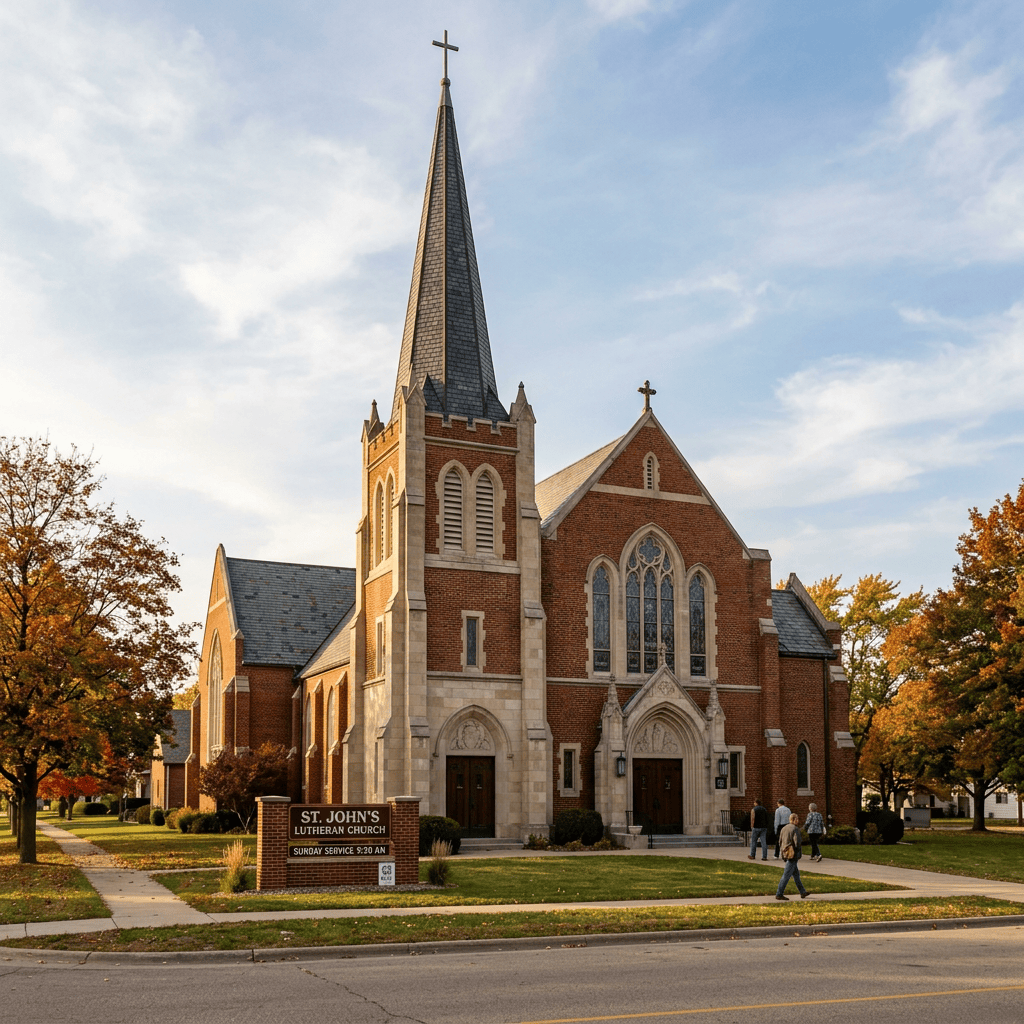
The Lutheran Church—Missouri Synod (LCMS) is a theologically and socially conservative Christian denomination. It strictly adheres to biblical inerrancy (the belief that the Bible is without error) and holds a traditional, literal interpretation of Scripture. Within American Lutheranism, it stands in stark contrast to the more socially and theologically liberal Evangelical Lutheran Church in America (ELCA). [1, 2, 3, 4]
Stance on the Ordination of Women
The LCMS strongly rejects the ordination of women to the pastoral office. This stance is rooted in its biblical hermeneutics and historical theology rather than political ideology. [1, 2]
Core Biblical Arguments
The LCMS bases its prohibition of female pastors on specific New Testament passages, which they interpret as timeless commands regarding church order rather than culturally bound rules: [1, 2]
- The Command of Silence: The synod points to passages like 1 Corinthians 14:34, which states that “women should keep silence in the churches,” meaning they are not to preach or hold the office of public ministry. [1, 2]
- The Prohibition of Authority: The synod emphasizes 1 Timothy 2:12, which states, “I do not permit a woman to teach or to exercise authority over a man.” The LCMS interprets the pastoral office as uniquely carrying this spiritual authority. [1]
- The Order of Creation: The LCMS teaches that God established a distinct “order of creation” in Genesis where men and women are equal in spiritual value before God but are assigned differing, complementary roles within marriage and the church structure. [1, 2]
Role of Women in the LCMS
While women cannot be ordained as pastors, they still serve in vital, non-pastoral staff and leadership positions within the synod: [1, 2]
- Deaconesses and Teachers: Women can be certified and rostered as commissioned ministers, serving as deaconesses, parochial school teachers, directors of Christian education, and missionaries. [1]
- Congregational Voting: Since 1969, women have been permitted to hold voting rights within local congregations. [1, 2]
- Restrictions on Communion: Because the LCMS views the administration of sacraments as tied to the pastoral office, official synodical guidance recommends that assisting with the distribution of Holy Communion be limited strictly to men to avoid theological confusion. [1]
If you are evaluating different Lutheran denominations, let me know if you would like me to compile a direct comparison table comparing the LCMS, ELCA, and WELS (Wisconsin Synod) on matters like scripture interpretation, communion practices, or social issues.
The Lutheran Church—Missouri SynodDenominations – Frequently Asked Questions – The Lutheran Church—Missouri SynodThe Lutheran Church—Missouri Synod (LCMS) and the Evangelical Lutheran Church in America (ELCA) have three main areas of differenc…
GottesdienstWhy Do We Not Ordain Women? – GottesdienstWe in the LCMS – and other conservative church bodies – insist on the traditional practice of male-only ordination. There are thre…
Conciliar PostWomen and the LCMS Church – Conciliar PostJul 27, 2015 — Take, for example, how the Wisconsin Synod of the Lutheran Church has denied suffrage to their female members. Only men may vote i…


Show all
show me the direct comparison table
Comparing Major American Lutheran Denominations
The theological differences between the three largest Lutheran bodies in the United States—the Evangelical Lutheran Church in America (ELCA), the Lutheran Church—Missouri Synod (LCMS), and the Wisconsin Evangelical Lutheran Synod (WELS)—primarily stem from how each body views the authority and interpretation of the Bible. [1, 2, 3, 4]
The table below highlights how their theological stances shape their church practices and views on social issues:
| Feature / Topic | Evangelical Lutheran Church in America (ELCA) | Lutheran Church—Missouri Synod (LCMS) | Wisconsin Evangelical Lutheran Synod (WELS) |
|---|---|---|---|
| Theological Lean | Theologically & Socially Liberal / Progressive | Theologically & Socially Conservative | Strictly Conservative / Confessional |
| Scripture & Inerrancy | Rejects biblical inerrancy; uses historical-critical methods to interpret scripture within cultural contexts. | Affirms biblical inerrancy; views the Bible as the infallible, error-free Word of God. | Affirms biblical inerrancy; strictly adheres to a literal and historical interpretation of Scripture. |
| Ordination of Women | Permitted. Women serve fully as pastors, bishops, and global leaders (since 1970). | Prohibited. Rooted in scripture commands; women cannot serve in the pastoral office. | Prohibited. Rooted in scripture commands; women cannot serve in the pastoral office. |
| Women’s Suffrage (Voting) | Permitted. Women have equal voting and leadership roles at all levels. | Permitted. Women have had the right to vote in local congregational matters since 1969. | Prohibited. Believes scripture forbids women from holding direct governing authority over men. |
| Communion Practice | Open Communion. All baptized Christians who believe in Jesus are welcome to participate. | Close(d) Communion. Generally restricted to LCMS members or those in confirmed doctrinal agreement. | Closed Communion. Strictly limited to WELS members or those in full doctrinal agreement. |
| Church Fellowship | Broadly ecumenical; maintains full altar/pulpit fellowship with Episcopalians, Methodists, Presbyterians, and others. | Restricts full altar/pulpit fellowship to churches with total agreement on core doctrines; permits limited prayer fellowship. | Strictly all-or-nothing “unit fellowship”; forbids any joint spiritual activities (even shared prayer) without total doctrinal agreement. |
| LGBTQ+ Ministry | Affirming. Ordains openly LGBTQ+ clergy and officially performs and blesses same-sex marriages. | Non-Affirming. Defines marriage strictly as a lifelong union between one man and one woman; views homosexual behavior as sinful. | Non-Affirming. Strictly opposes same-sex marriage and teaches that practicing homosexuality is contrary to God’s law. |
Would you like to explore the history of why WELS and the LCMS broke fellowship in the mid-20th century, or would you prefer a closer look at the specific biblical hermeneutics (methods of interpretation) that cause these groups to read the exact same passages so differently? [1, 2, 3]


Leave a comment